What is an API?
API stands for Application Programming Interface. Roughly speaking, an API regulates the flow of information between different databases, users and providers. Without APIs, the Internet as we currently know and appreciate it would not be possible at all.
Integration
Just about any form of information is sent in some way, shape or form through an interface to various databases where it is then used in different ways.
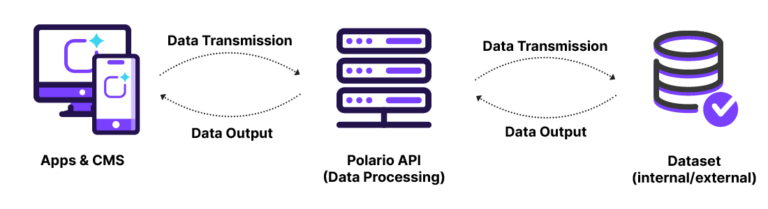
An example of this is the personal profile of an account. The information, such as name and e-mail address, is entered in the content management system (CMS) or the app and then sent to the API. This processes and stores the information and outputs it back to the apps or CMS when data is requested.
Polario API Integration Overview
- Add your own tools
- Automation of imports & notifications etc.
- Use of Polario as backend as a service
- Custom developments for even more functionalities
Access to our RESTful API is available upon request.
Polario API & Integration
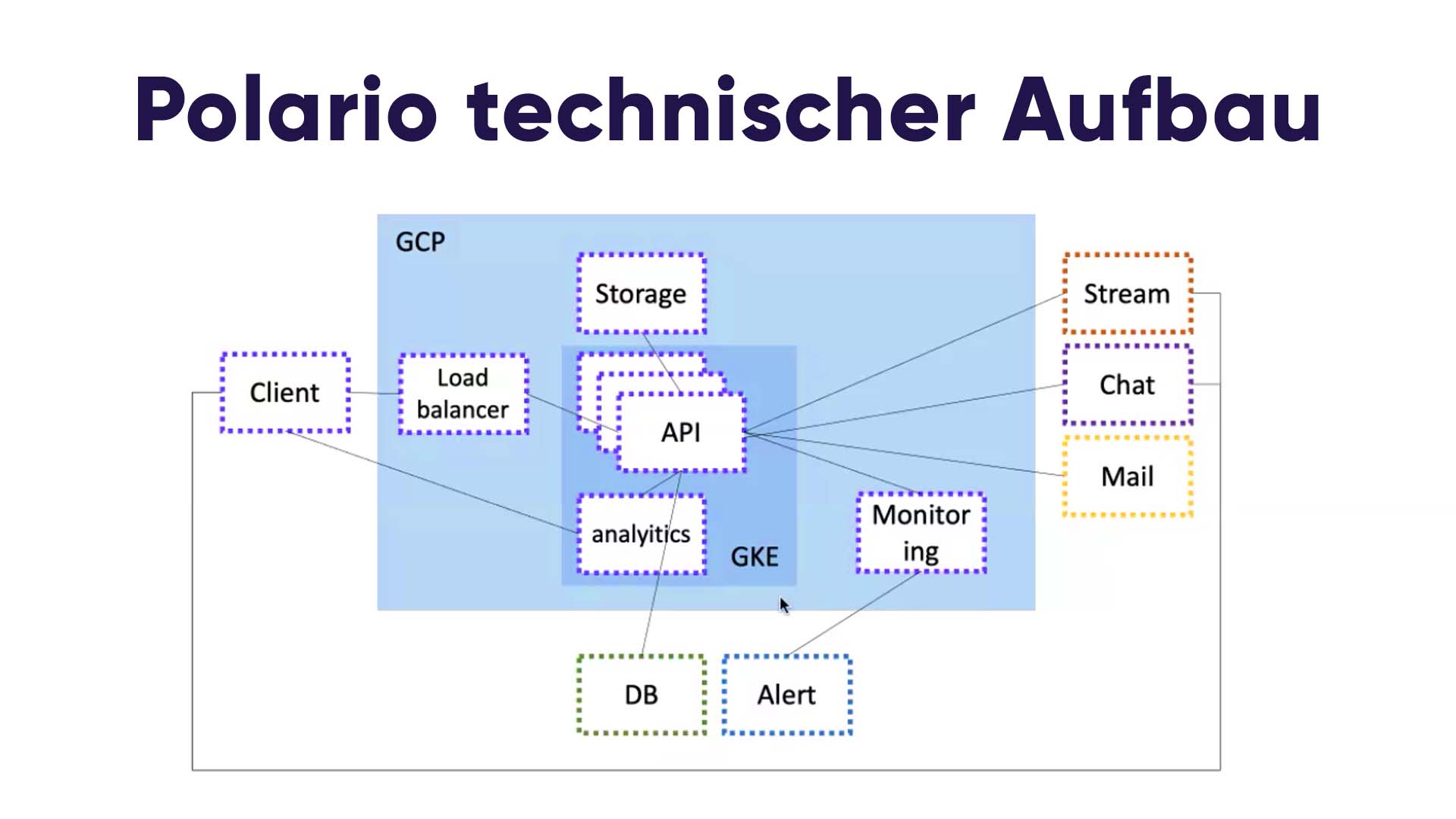
If you look at the technical structure, the API is the heart of Polario. All data sets of our system are filled and modified via interfaces.
Thus, it is possible to easily integrate dynamic web content and components in Polario. In principle, complete custom developments are also possible, which activate highly individual functionalities within your app.
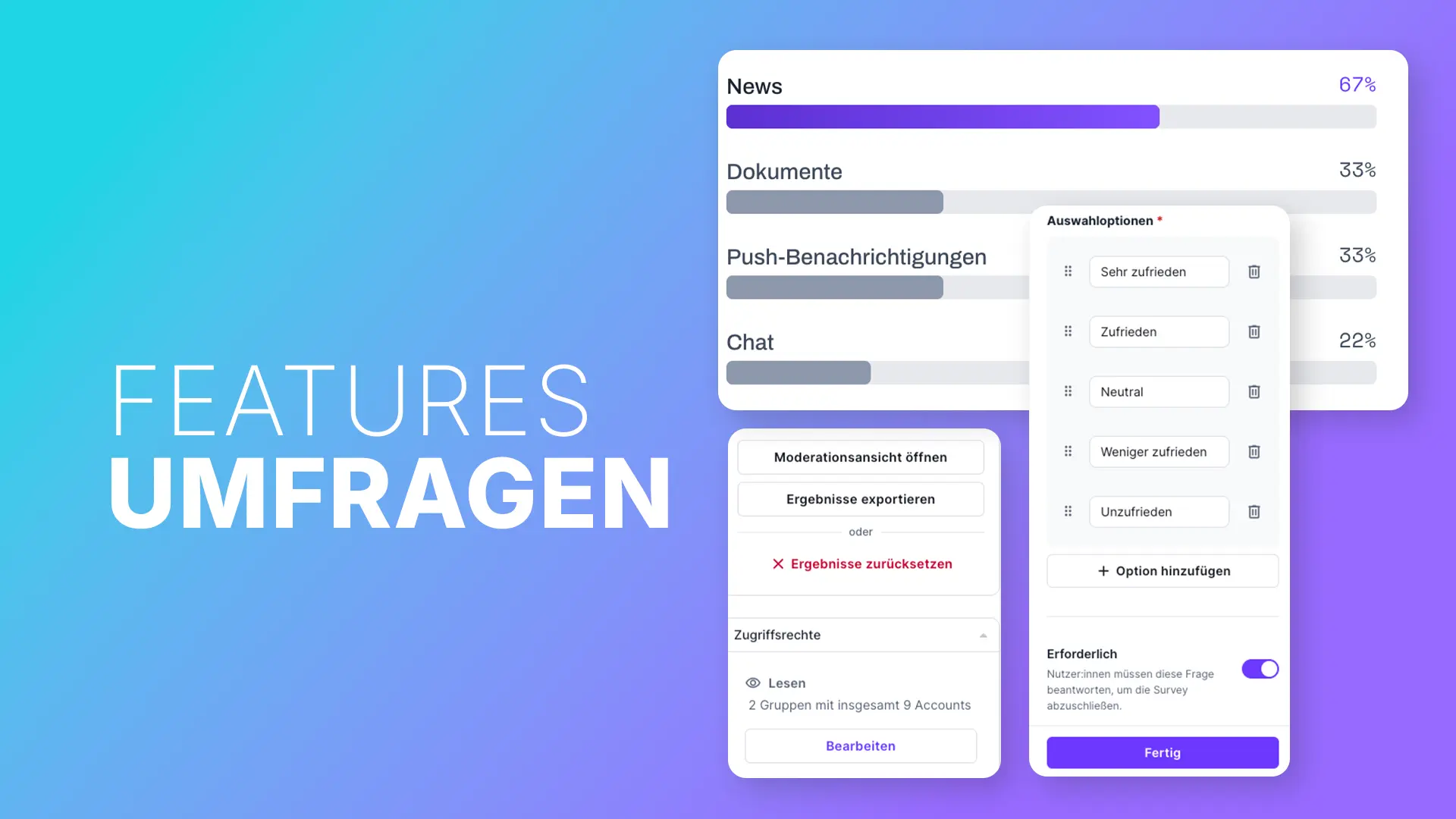
Automate person imports or notifications and much more via API integration. You can also simplify the evaluation of surveys by dynamically reading out the results. Or create your own administration system, tailored to your CI.
It is also possible to use Polario as a backend as a service. Accordingly, only the API will be used to maintain their dataset with the functionalities of Polario. Optionally, rendered Polario frontends can be added or provided by yourself. Either via an external service provider or as in-house development.
For working with our Polario API, we have put special emphasis on the UX for in-house development in order to be particularly supportive in the implementation process and error handling. Integrating of our API gives you countless possibilities just waiting to be explored.
Connection of external API & integration
By communicating with external APIs, e.g. from third-party providers, functionalities can be easily linked together. To make this possible, only an adapter needs to be developed, which ensures smooth communication. This development is particularly favored by the provision of standardized interfaces.
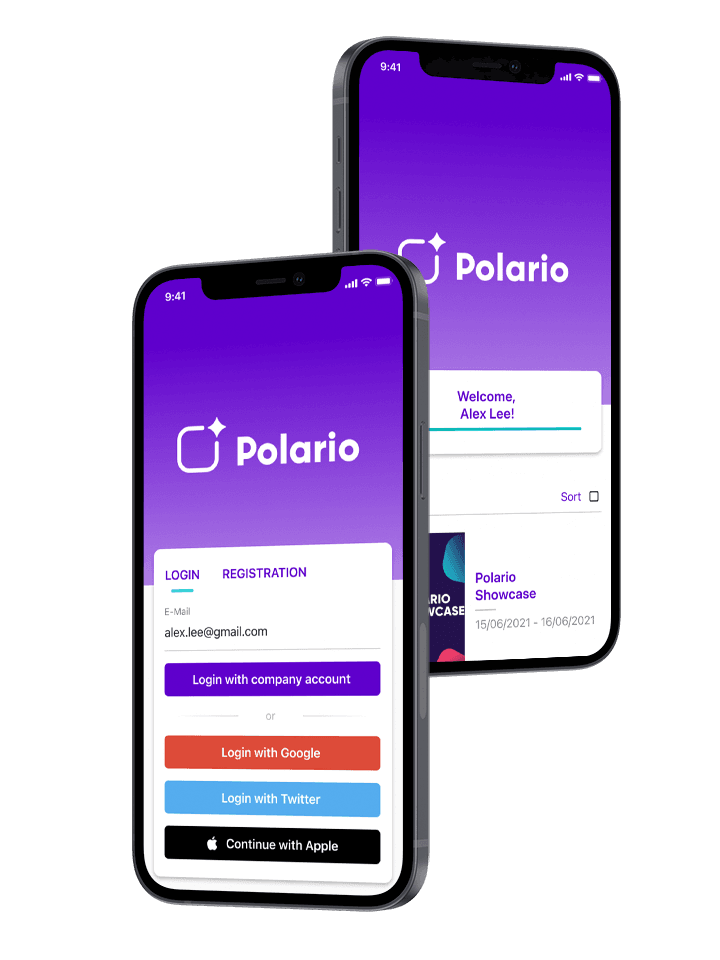
Some of these adapters have already been developed in Polario, such as login via SAML or oAuth2. This simplifies the login process rapidly and enables login via external services such as Google and Microsoft or even company accounts which is of high interest especially for employee apps.
It would also be possible to develop an adapter for the connection of social media platforms. Thus, profile data could be retrieved and displayed within the app.
The development of the adapters for communication with an API & integration of external data can either be done by you or on request through us.
Stay up to date!
Subscribe to our newsletter for the latest updates and exclusive content.
News from HQ
What we are working on
In our blog, we keep you up to date with product development topics and provide internal insights.
The digital notice board combines information and dialogue and strengthens modern communication in companies, administration and education.
How to successfully recruit members with an association app. Discover how digital solutions attract, inspire and retain young...Read ->
Discover how digital member management simplifies processes, saves time, and provides long-term support for your organization.
The demands placed on associations have changed significantly in recent years: members expect fast, digital communication, boards are...Read ->
The most important checklist for choosing a member app. Evaluate requirements, features and costs correctly now and find...Read ->
Optimised visitor management improves the satisfaction of your event visitors and ensures clear processes and a better experience.
How can you increase usage of your social intranet? Discover three strategies for employee engagement and key KPIs...Read ->
Learn how to successfully implement a social intranet. From needs analysis to employee activation.
What distinguishes a classic intranet from a social intranet? Advantages, disadvantages and areas of application compared. Find out...Read ->
From technology to data protection: these are the requirements that a social intranet must meet. Read the selection...Read ->
Follow us on social media to stay informed.
Do you have any questions or suggestions? Feel free to contact us!